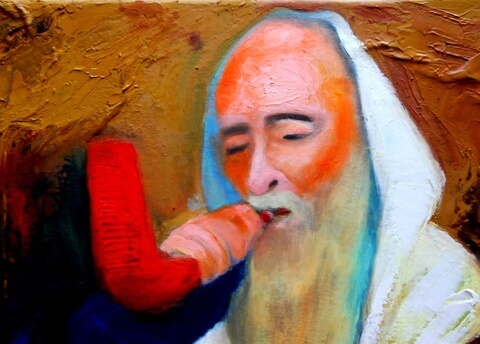
The central mitzvah of Rosh Hashanah is to hear the blasts of the shofar. The ram’s horn is blown twice during the holiday service: first, immediately before the Musaf prayer, and a second time during the Musaf prayer.
Why do we need two sets of shofar blasts?
Teshuvah of the Mind and Heart
The prophet Isaiah taught those who wish to return to God:
דִּרְשׁוּ ה’ בְּהִמָּצְאוֹ קְרָאֻהוּ בִּהְיוֹתוֹ קָרוֹב׃
“Seek out God when He is found.
Call out to Him when He is near.” (Isaiah 55:6)
What is the difference between these two aspects of teshuvah: “seeking out God” and “calling out to Him”?
First, it is necessary to “seek out God.” We need to restore the soul’s inner light, dimmed by character faults and misdeeds. Before losing our way, we felt a joy in serving God. We recognized God’s greatness and were delighted with the opportunity to study His Torah and fulfill His mitzvot. Sin, however, darkens the mind and numbs the heart, causing us to lose the wonderful revelations from God’s immanence. Therefore, the first stage of teshuvah is to “seek out God” — an intellectual striving to recover our former enlightenment and restore our joy in knowing God and His ways.
The second area that must be repaired is in the realm of the emotions, to restore the lost feeling of God’s closeness and protection, the perception of Divine favor in material and spiritual matters. To recover this loss, we must “call out to God” and reach out to Him in prayer. We need to overcome our emotional estrangement and restore our sense of God’s intimacy.
Focus the Mind, Open the Heart
The shofar is the tool that helps us accomplish both of these goals, seeking out God with the mind and calling to Him with the heart.
The first set of blasts is blown before praying the Rosh Hashanah Musaf prayer. They are called תקיעות דמיושב, “blasts while sitting,” as they correspond to the teshuvah of the mind: a composed and thoughtful introspection on our insignificance and God’s infinite greatness. Demeyushav comes from the Hebrew word for “sitting” — yeshivah — also means an academy of Torah study. These blasts inspire us to contemplate God and His ways, to “seek out God where He is found.”
The second set of shofar blasts takes place during the Musaf prayer. These blasts are called תקיעות דמועמד, “blasts while standing.” They are an integral part of the prayer service. Deme'umad comes from the Hebrew word for “standing” — amidah — which is also the name of the central prayer, recited while standing. These shofar blasts are like prayer; they are an emotional service of God that fills us with awe and humility. They remind us to reconnect to God with our hearts, to feel His closeness and protection, to “call out to Him when He is near.”
(Silver from the Land of Israel. Adapted from Midbar Shur, pp. 56-58)