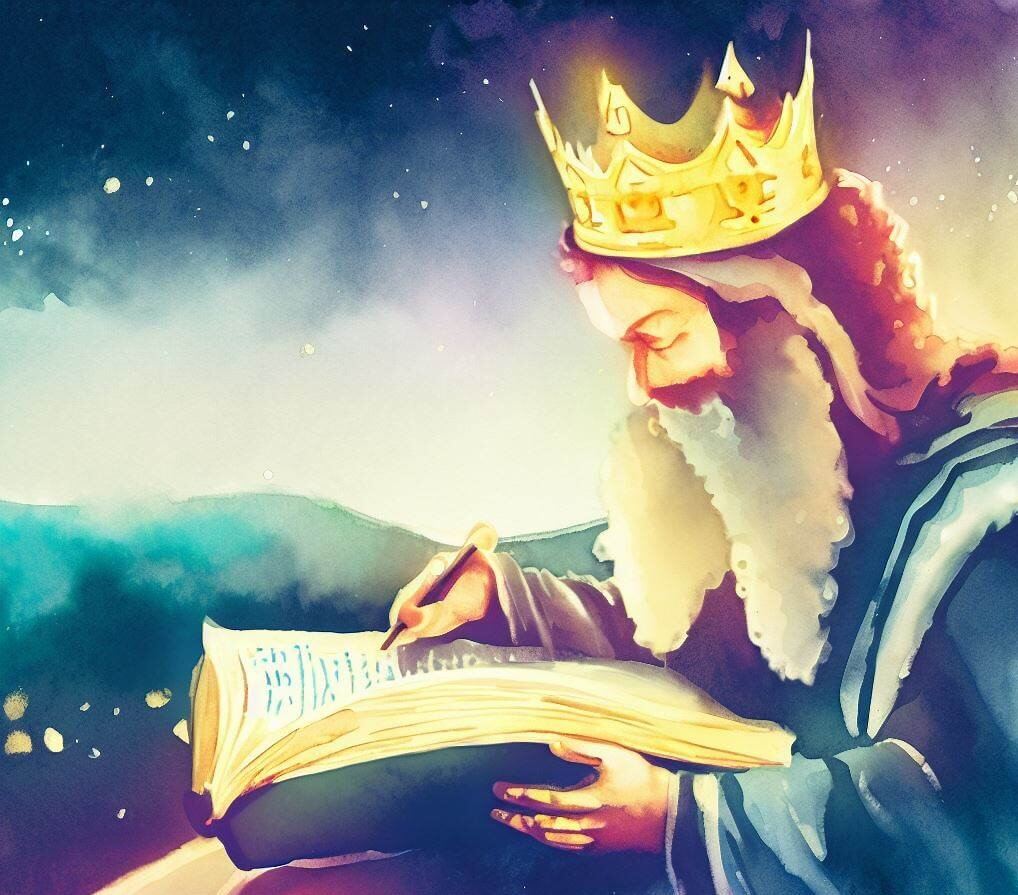
While the Torah commands every Jew to write a Torah scroll, there is one individual who is obligated to write an additional Torah scroll. Surprisingly, it is neither the high priest, nor the head of Sanhedrin. It is the king who is commanded to write a second Torah scroll during his reign and keep it with him at all times (Deut. 17:18-19, Sanhedrin 2:4).
What is the significance of these two Torah scrolls, that of the individual and that of the king?
Personal Torah and Communal Torah
The people of Israel accepted the Torah at Sinai on two levels. Each individual consented to follow the Torah’s laws as a member of the Jewish people. And the Jewish people as a nation also accepted the Torah, so that its moral instructions are binding on its national institutions — the judiciary, the government, the army, and so on.
Observing the Torah on the national level is, however, far more complex than the individual’s observance of the Torah. The Torah and its mitzvot were given to refine and elevate humanity. The process of uplifting an entire nation, with its political exigencies and security needs, is far more complicated than the process of elevating the individual.
As individuals, we approach issues of interpersonal morality informed by an innate sense of justice. Mankind, however, has yet to attain a consensus on the ethical issues connected to affairs of state. Furthermore, the propensity for moral lapse — and the severity of such lapses — is far greater on the national level. As a result, all notions of good and evil, propriety and injustice, are frequently lost amidst the raging turmoil of political issues and national concerns.
The greatness of the messianic king lies in his potential to fulfill the Torah’s ethical ideals also in the political realm. We read about the foundation of the messianic dynasty in the book of Ruth, which concludes with the lineage of David, king of Israel. Why is it customary to read the book of Ruth on the holiday of Shavuot? Because the account of the origins of the Davidic dynasty reminds us of the second level of Torah law that we accepted at Sinai, that of the nation as a whole.
Rav Kook cautioned regarding the moral and spiritual dangers inherent in political life:
We must not allow the tendency toward factionalism, which threatens most strongly at the inception of a political movement, to deter us from seeking justice and truth, from loving all of humanity, both the collective and the individual, from love for the Jewish people, and from the holy obligations that are unique to Israel. We are commanded not only to be holy individuals, but also, and especially, to be ‘a kingdom of priests and a holy nation.’
(Silver from the Land of Israel. Adapted from Ma’amarei HaRe’iyah, pp. 173-174.)